Just over 150 years ago, John Alvord—a minister and abolitionist—celebrated when President Lincoln issued the Emancipation Proclamation. But he knew that a change in legal status—finally recognizing our shared humanity—was only the beginning. As men and women began to rebuild their lives in post-slavery America, he understood that it would be essential for former slaves to have access to land and capital. Yet, these two basic elements for progress were consistently denied to former slaves.
Even though slavery officially ended, racism still runs deep.
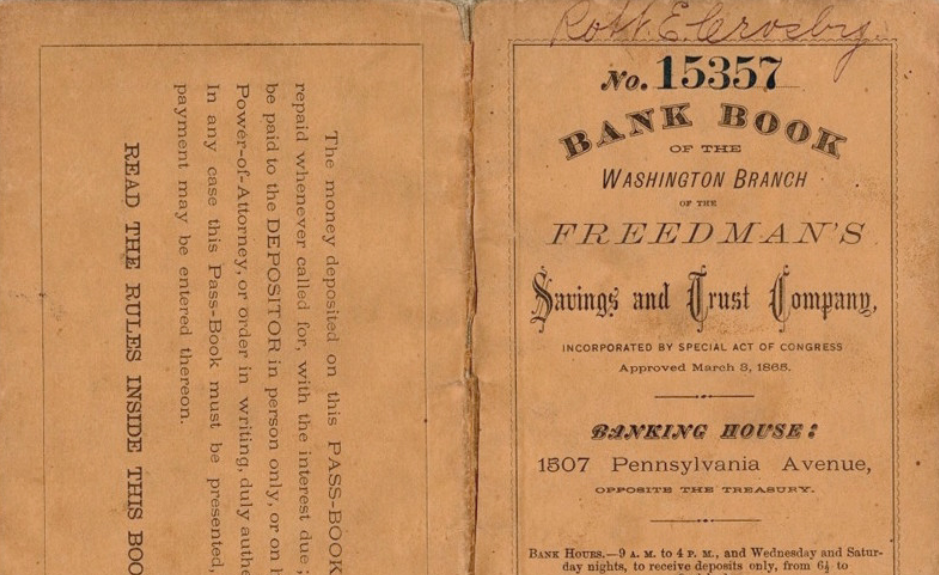
Though not a banker himself, Alvord launched The Freedman’s Savings and Trust Company (Freedman’s Bank) in March 1865. Alvord believed in the power of investment, and he intended the bank to help newly-emancipated people build wealth by providing a safe place to bank and to save their new earnings. The bank gave about 70,000 men and women an opportunity to deposit their funds and to invest in their future.
Unfortunately, due to entrenched racism, an 1870 charter amendment ensured that most investments would fund white business ventures, and soon, the bank became the very opposite of what it was designed to be. (Mission drift in the fullest sense!) Despite a last-ditch effort by Frederick Douglass to save it, the bank officially closed in 1874.
From Freedman’s Bank to today, the reality is that land and capital still matter. If you want to uproot racism, you must talk about land and capital. If you want to see poverty eradicated, you must address barriers to employment and the ability to save.
It’s been over a century since Freedman’s Bank, and I find myself longing to see more creative ways for all communities to have access to housing, jobs, and capital. For many in “capital deserts,” the only access to capital seems to be through payday lenders, notorious for usurious interest rates that thrive on entrapment and debt.
Families in these areas often face difficulties in home ownership, too, through racially restrictive covenants and limited access to mortgages. In American Apartheid, Douglas Massey and Nancy Denton argue that residential segregation “supports other racially discriminatory processes and binds them together into a coherent and uniquely effective system of racial subordination.”
Land and capital. John Alvord knew their impact. And he knew what would happen if a group of people were systematically denied access to them.
Today, we can’t have an honest conversation about overcoming inequity, confronting racism, and progressing in the fight against poverty if we don’t address these core needs. It’s impossible to pursue justice without seeking economic opportunity.
Thankfully, there are many organizations today seeking economic reform for men and women in marginalized communities:
- Hustle PHX: Working in Phoenix, Hustle PHX helps to create sustainable business ventures that affirm dignity and empower communities to flourish. Their program provides entrepreneurs with intellectual capital (education and skill development), social capital (business mentors), and financial capital (investment opportunities) to invest in their businesses and communities.
- Jobs for Life: In partnership with the local Church, Jobs for Life helps to prepare men and women for meaningful work. They acknowledge that the Church fights poverty by giving food (62 percent), housing (55 percent), and clothing (22 percent) instead of engaging employment (only 2 percent!). By “flipping the list,” they seek to empower the Church to equip men and women to find jobs that will enable them to provide food, housing, and clothing for themselves.
- Operation HOPE: With a focus on financial dignity and inclusion, Operation HOPE offers the tools, coaching, and education for individuals to secure financial independence. Specifically, they develop customized action plans to build businesses, raise credit scores, buy homes, and inform better decision-making. Operation HOPE has empowered over 2.8 million adults and youth and directed over $3.2 billion in economic activity to disenfranchised communities.
What organizations do you know that are creatively working to find solutions to land and capital needs for minority communities? Our family would love to try and get behind them.
We need a new generation of Freedman’s Bankers: men and women who understand the transformative power of investment and are committed to helping change the landscape of economic equality in the United States and around the globe.