At 24 years old, I left my home in the Boston suburbs to serve in Cambodian communities, which opened up a career in international development and literally changed the direction of my life.
Today, I have the privilege of working for an organization that sends men and women to serve around the world. And I know these experiences have been equally transforming.
While these international assignments are powerful experiences, HOPE International only has a small number of these international opportunities. The reason is simple: we prefer to hire the skilled, dedicated, and passionate people already living in the places where we serve. We employ and empower national leaders, who are better equipped to lead and serve in these contexts.
This belief is part of a larger (and long overdue!) shift across the field of international development and missions. James Wolfensohn, former World Bank president, explained that “local ownership and involvement must be central” to alleviate poverty. This principle, known as subsidiarity, holds that economic and social problems should be solved by those closest to them, only seeking the assistance of larger, geographically-distant organizations temporarily and with precaution.
Why does this matter?
Without national leadership, well-meaning development organizations can fall into the trap of knowledge paternalism. Coined by Steve Corbett and Brian Fikkert in their book, When Helping Hurts, knowledge paternalism “assume[s] that we have all the best ideas about how to do things” [2].
Over twenty years ago, a small church in Lancaster, PA came face-to-face with knowledge paternalism after sending free food and medical supplies to families in Ukraine. It took a question from a Ukrainian pastor—“Isn’t there a way you can help us help ourselves?”—to help church members identify that their plan lacked subsidiarity.
Jeff Rutt, member of the church and founder of HOPE, shared, “The first problem was that it was our idea.” If his church wanted to help the underserved—and help them in a sustainable, dignifying way—they needed to ask, listen, and respond to Ukrainian friends. Jeff knew he didn’t have “all the best ideas about how to do things”—in fact, some of the ideas might have actually hurt the local community.
Subsidiarity in Scripture
We don’t have to search long to see that the principle of subsidiarity is woven throughout Scripture.
God could have called anyone to free His people from captivity. But He chose Moses, a Hebrew man who grew up in Pharaoh’s house and had experienced the leadership of Pharaoh firsthand. God specifically prepared Moses to lead the Hebrews out of bondage, selecting a man intimately familiar with both the Egyptians and the Israelites to do the job.
Knowledge paternalism claims that we can know the needs of a community better than those who live in it. Scripture advances a different truth: women and men are created in the image and likeness of God, with unique gifts, skills, and capacity—and they are well-equipped to address the needs of their own communities.
While there are needs for support services and short-term technical consultants, the priority is always to find proximate solutions and leaders who understand the countries and contexts. Better decisions result when leadership represents the communities served and when global voices speak into all significant decisions. Eva Muraya, Kenyan entrepreneur and CEO of Brand Strategy & Development, embodies the power of subsidiarity and notes, “It is the way it was meant to be—for us to leverage our communities out of poverty.”
It’s time to fully embrace the shift away from imported solutions and celebrate the power of home-grown compassion.
——-
Thank you to Sarah Woodard (2019 HOPE intern) for her thoughtful contributions to this blog post.
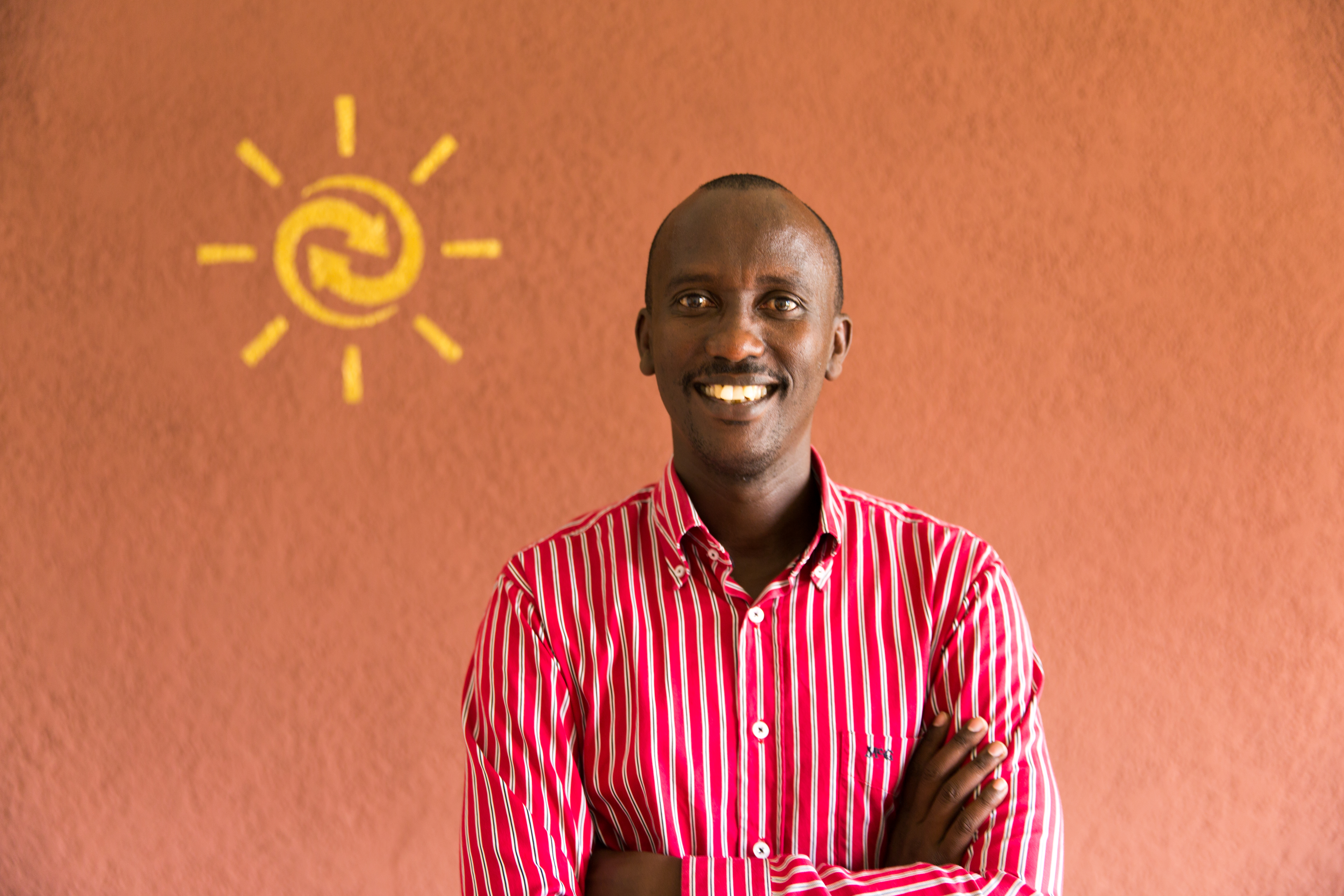
Feature Image: Jean de Dieu Bizimana, HOPE Country Director for the Burundi Savings Group Program
[1] Steve Corbett and Brian Fikkert, When Helping Hurts: How to Alleviate Poverty Without Hurting the Poor … And Yourself (Chicago: Moody Publishers, 2009), 116.