Today’s post is co-written with my friend, Jena Lee Nardella. Jena is the co-founder of Blood:Water, a nonprofit that equips and partners with organizations in Africa to overcome the HIV/AIDS and water crises. After 12 years of leading Blood:Water, Jena wrote One Thousand Wells and now mentors other social entrepreneurs through a nonprofit accelerator program called Praxis. Jena is a brilliant writer, speaker, and advocate for justice.
Full of youthful idealism and boundless dreams, we started our careers in the nonprofit sector. In our twenties, we were engaged in rapidly scaling organizations in emerging sectors of clean water and economic development.
Invigorated by compelling missions and our sense of unlimited opportunity, we built teams, raised funds, and spread messages of hope. We were strengthened by the esprit de corps of our teams and the joy of the impact on families around the globe.
But then … reality hit. And it hit hard.
What started out as youthful idealism quickly edged towards exhaustion and frustration. There were fundraising constraints and staffing shortages, board disagreements and donor dissatisfaction, programmatic challenges, and unhealthy competition instead of collaboration.
Here’s the truth: Nonprofit work is hard work. Launching a nonprofit is relatively easy—there are over one million public charities based in the United States working both locally and abroad—but scaling a healthy organization is exceptionally challenging. There have been incredible joys in this work, but overall, it’s far more difficult than we initially imagined.
In talking with friends and colleagues in the sector, we began to realize that these challenges were not unique to us. In fact, in our subsequent work with hundreds of nonprofits and funders through Praxis, we saw that nearly all of the pressures and dysfunctions we experienced as eager, ambitious, well-intentioned nonprofit leaders were widespread in the sector. As a team, we concluded that these difficulties stemmed from two core flaws in nonprofit structure: the “nobility trap” and the “stakeholder gap.” You can read more here.
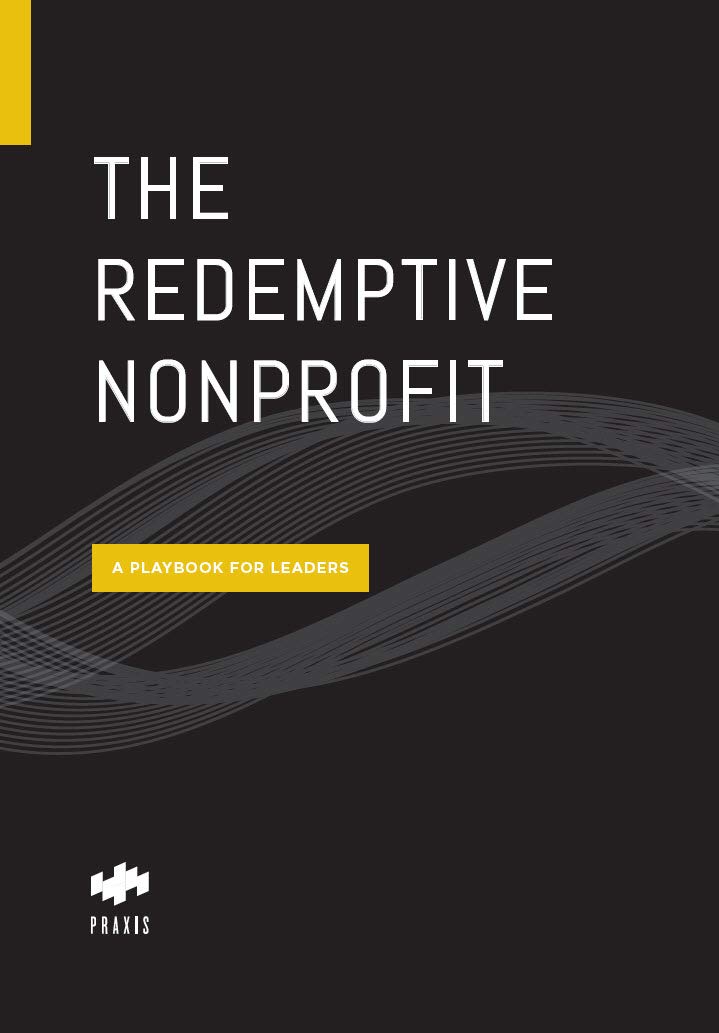
To share ways of closing these gaps, we worked with the Praxis team to write The Redemptive Nonprofit: A Playbook for Leaders. Our hope is that it will serve as an invitation for excellence and integrity in nonprofits. But even more than that, we hope to inspire a new generation of leaders to go beyond the baseline of ethics and excellence and build nonprofits that embody the radical hope of the Christian gospel and its power to transform people, communities, and the course of history.