This week’s blog post is written by my colleague Ashley Dickens.
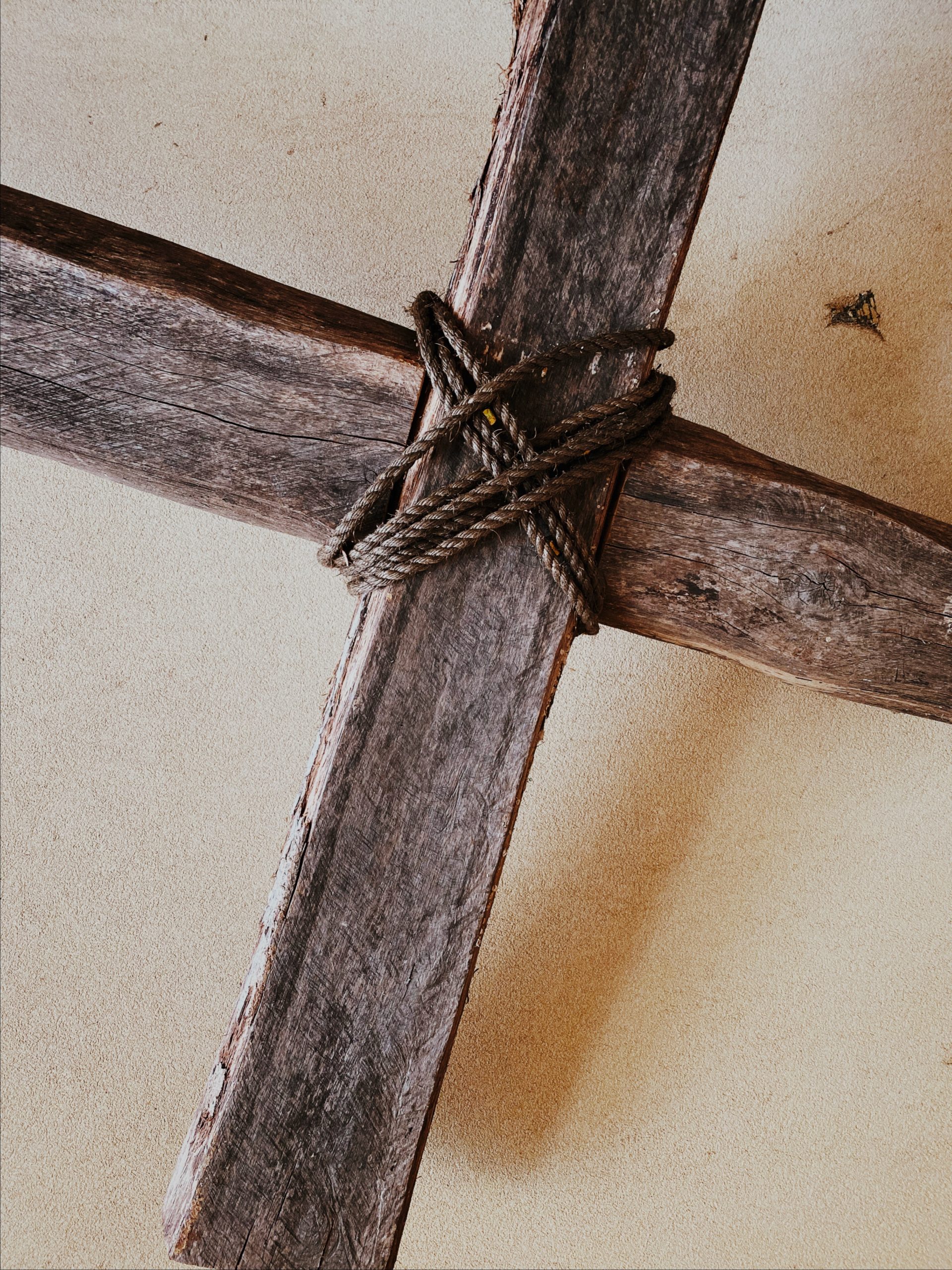
This year, perhaps more than ever before, I feel the ache of Good Friday. I feel the weight of Hope Himself being nailed to a cross, taking shuddering, rasping breaths, wondering why His Father had left him alone. I feel Mary’s helpless anguish as she watched the son she cherished writhe in pain just steps away from her. Once she’d bandaged his skinned knees and swept him up in her arms to kiss little tear-stained cheeks, and now, in his moment of greatest agony, she couldn’t even get close enough to cradle his face as he cried out. Throngs of spectators swirled all around her and the others who loved Him, jeering, leering, lurking—as though the murder were a game. And the people who loved Jesus fiercest and best sank low to the ground in despair—littering Golgotha with broken shards of what they’d desperately hoped would be. They stayed until His heart stopped beating, until the crowd lost interest and dispersed. I wonder if Mary fell to the dirt at the foot of that cross to cradle the body of her lifeless son one last time after they took him down—hopeless.
The people of God understand grief and lament. We know the pain of Good Friday. We know the quiet of Saturday—the finality of death, the wild frustration of begging God for answers and hearing thundering silence in return. We know what it is to feel hopeless and alone.
I feel the ache of Good Friday.
I feel it as I watch women and men across the globe who have scraped and fought and waited patiently for the chance to run their own businesses watch helplessly as treasured dreams slip through their fingers. Parents who love their kids every bit as much as I love mine, who don’t know what they will feed them tonight. I feel it as I watch the pandemic unfold in places like New York City, in crowded refugee camps in the Greek Islands, in teeming slums in India, in Syria. I feel it as I watch this crisis unfold in my own neighborhood, and I think about friends living in extreme poverty for whom social distancing is utterly impossible. I think about the millions of women, men, and children weathering this pandemic who don’t have access to the safety nets and services that I so often take for granted here in the U.S. I feel it as I hear stories of people dying in isolation—their families prohibited from entering into the ICU to say goodbye. I feel it as I hear stories of global neighbors dying preventable COVID-19 deaths simply because they were born into poverty and don’t have access to medical care.
I feel the ache of Good Friday. The world is not as it should be.
This year, more than any year before it, I need the hope of Sunday. I need the hope of Mary Magdalene mournfully approaching the tomb while it was still dark that early morning, so consumed with grief she could barely breathe. The Bible tells us that she was a woman “from whom seven demons had gone out of.” As a woman in a culture that overlooked and dismissed them, Mary Magdalene had an acute understanding of what it was like to live on the margins of society. She knew what it was like to live in poverty, to be ostracized from her community, to be disbelieved, rejected, and even feared. And in a stunning declaration to a watching world, God the Father chose her to be the very first to stumble into the empty tomb and see angels. God chose a woman who was intimately familiar with pain and loss, a woman who had spent her life longing for good news to be the very first to hear the best news the world has ever known—He’s not dead! Hope is alive! Mary Magdalene burst from the tomb and unleashed hope back into a world that had despaired of it as she heralded what she had seen with her own eyes to be true–death had not held the Savior of the world. The great unraveling of sin and death and grief had begun.
Whether it’s shepherds on a hillside first receiving good news of great joy, or a formerly demon-possessed woman in a culture that disdained her receiving the news that death had not had the final word, it seems that when the world needs hope, God first looks to the margins. We serve a risen, watching God of indiscriminate mercy whose eyes look first to the overlooked. A God who comes close to those who stand mourning outside of tombs and wonder how they’ll keep breathing.
As someone who seeks to empower people living on the margins, I take great comfort in this. The grief and incredible loss that our more vulnerable brothers and sisters across the globe are experiencing is not hidden from Jesus. It breaks His heart. He died to undo it and rose three days later so that death and pain could not and would NEVER AGAIN have the final word. We grieve as people with indomitable hope, because we understand that the sting of a world badly broken aches today, but it is not forever.
This Easter, as I survey the incredible pain unfolding across the globe, I am more committed than ever to living in the hope of the resurrection. I’m committed to mirroring our Savior and being quick to look to the margins to find ways to be His hands and feet. Today I join with that great cloud of witnesses looking to the heavens and asking God to let His kingdom come, and to let it begin with me.