It’s time to solve the clean water crisis.
Between improving filtration, more advanced drilling technology, and passionate advocates raising awareness, this is one of the problems that should be history in our lifetime.
Laurel, my amazing wife, and some friends created an advocacy organization called For More and I’ve had a front row seat to the growing enthusiasm in schools and in churches to solve this problem.
But they’ve discovered something interesting. The dirty secret of clean water is that drilling wells isn’t enough.
According to Ken Stern in With Charity for All, the clean water crisis (like most issues) is more complicated to solve than we might originally think. Consider the following:
A high percentage of wells are abandoned. According to the World Bank, 1/3 of all wells in South Asia are discarded because they break down. And half have fallen apart in East Africa. If we drill wells but do not consider local ownership and ongoing maintenance, we minimize the potential impact.
WASH, not just water. Within the clean water movement, many have taken on the acronym WASH for “water, sanitation and hygiene” with the understanding that clean water is just one piece of improving health. According to Stern, “Indeed, water is less important in this equation as a drinking source than as a cleansing agent, permitting cleaning of hands, clothes, and food supplies…” It might not be as popular, but helping communities improve their latrines is an essential part of global health. 900 million suffer from a lack of potable drinking water. Over 2 ½ billion lack proper sanitation, causing diarrhea to be a more deadly killer than all wars combined.
Market Solutions. I also celebrate local market-based solutions springing up to play an essential role. Recently, I saw a group of Rwandan women who will never make headlines in the clean water movement, but they are making a powerful contribution by making local soap, as a business to provide for their families and as a way of improving health. Here is their recipe:
They melt the ingredients in a jerrycan over the fire.

They pour heated ingredients into a mold to cool.

Finally, they cut the mold into square soap sizes, fresh and ready to sell!
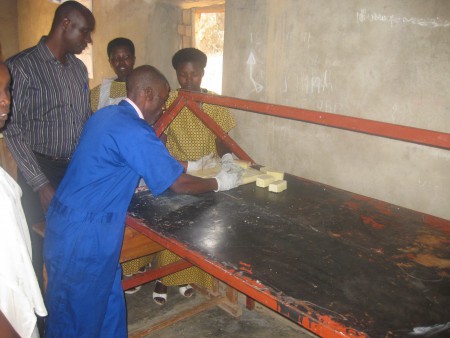
They have an incentive to help improve the hygiene in their communities as they market their product. Not only are they having an economic impact, but are also contributing to the physical health of their community.
Let’s celebrate the new wells, but let’s also celebrate the soap makers and educators and toilet manufacturers all contributing to this global crisis.

November 3, 2013
Good post, Peter. Thank you for shedding light on to the complexity of water development. The reality of our ‘clean water crisis’ is that clean/safe water actually has the smallest impact on the crisis (will only reduce disease by 21%). The real crisis is preventable diarrheal diseases and death caused by the combination of unsafe water and improper sanitation/hygiene (88% reduction of diarrheal disease when combined).
Diarrhea is just not that fun to talk about, but it actually kills more children under five than AIDS, malaria, and measles, combined.
Clean water is fun to talk about. Especially at church. Pictures of clean water being poured into a cup are inspiring and we all must celebrate the joy found in that water. The Biblical parallels with clean water are seemingly endless, too. But, to really end this crisis, we (the Church) have to talk and care about the uncomfortable. There are millions of lives depending on these critical conversations.
Thank you for hosting space for this dialogue to transpire!
(source: http://www.cdc.gov/healthywater/global/diarrhea-burden.html#one))