Payday lending – it’s everywhere but especially in communities with lower per capita incomes.
It’s just one way lenders prey upon cash-strapped individuals: “In a typical payday loan transaction, a borrower writes a postdated check to the lender for the amount of the loan plus a fee – usually $20 for each $100 borrowed. The lender agrees not to cash the check for a short period, often two weeks, or in theory, the borrower’s next payday,” said reporter Paul Gore of the Milwaukee Journal Sentinel.
At first, that sounds better than bouncing a check. Until you realize “that’s not a 20 percent interest rate. It’s 20 percent interest for two weeks. That’s an annual rate of 520 percent,” according to Bill Christofferson, author of a popular blog in Wisconsin.
There are always unscrupulous people ready to take advantage of desperation.
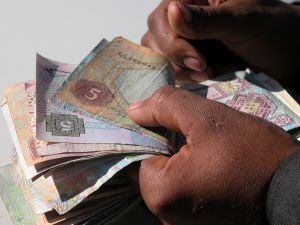
But an even bigger problem is the payday lending equivalent in the developing world. Just like the cycle in the U.S., an emergency causes you to fall into debt. You have no savings. You do anything to take care of your immediate need.
So you go to the one person who will lend you money – the local loan shark. You desperately hope you’ll be able to figure something out by the time the bill is due.
And sometimes, the only thing you have to pledge is a child.
“You see, Taj Mohammad had to give his daughter. There was no other way,” said a village elder of an Afghani father being forced to give his six-year-old daughter, Naghma, to be married to the 17-year-old son of the loan shark.
“And, it solved the problem,” the elder said in the New York Times article, “Painful Payment for Afghan Debt: A Daughter, 6,” by Alissa J. Rubin.
Poverty robs people of choice. In this families’ case, they needed money for hospital visits and medical emergencies. Yet with the current crisis averted, they were shackled by a rapidly escalating mountain of debt until the only possible solution was to give their daughter to clear the debt of $2,500.
The consequences of loan sharks are heartbreaking. “I am not happy with this decision; it was not what I wanted for her,” said Gustalda, the little girl’s mother.
Her father said, “A 6-year-old girl doesn’t know about having a mother-in-law, a father-in-law, or having a husband or being a wife.”
Beyond this one story, pledging sisters and daughters as repayment for debt is happening in places of great poverty. Indebted traffickers are repaying their debts by the sale of family members, according to the article.
There is a tragic link between the human trafficking crisis and loan sharks who prey on those in poverty. “Debt bondage (also known as bonded labor) is probably the most common, but least known contemporary form of slavery today,” according to the Global Alliance Against Traffic in Women. http://www.gaatw.org/index.php?option=com_content&view=article&id=589:debt-bondage-in-the-world-an-underestimated-and-forgotten-scourge-&catid=102:Briefers&Itemid=22.
As we want to shine a light on slavery and trafficking, part of the solution is found in giving families alternatives to predatory lending. If we’re in it to end it, we can’t ignore the issue of job creation. I’m passionate about putting loan sharks out of business and helping people finding employment – so that people can sleep easier knowing their six year old daughter will never be sold to pay off a debt.
Watch how Jacqueline was lifted out of prostitution through job creation in UNCHARITY:
*Note: An update to the story about Taj Mohammad can be found here. http://www.nytimes.com/2013/04/02/world/asia/donor-pays-afghan-familys-debt-but-questions-remain.html?_r=1&.



April 9, 2013
Peter Greer’s article is why Step Ahead stands for encouraging local savings groups that bring growing financial security and responsibility. His projection of 20% a month is the average for loan sharks in Thailand.
April 16, 2013
John – Thanks for your ministry at Step Ahead! Keep up the great work you’re doing.