Increasingly, when I’ve been asked to share HOPE’s mission statement, it catches in my throat. Somehow, it has become harder and harder to choke out two small but incredibly significant words: “the poor.”
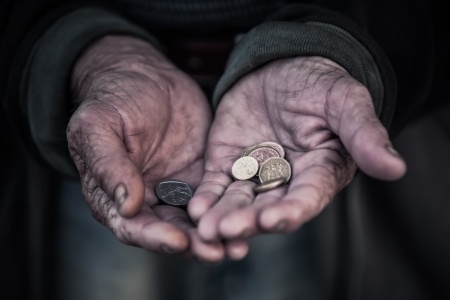
Our mission statement is, “To invest in the dreams of the poor in the world’s underserved communities as we proclaim and live the gospel.” So many of the things that I am deeply passionate about are encapsulated in that simple sentence. I love that we are investors in dreams. I love that we work in the underserved regions of the world. I love how unapologetic we are about our bold commitment to the Gospel.
My discomfort stems from labeling the people we serve as “the poor.” Here’s why.
1. It further entraps people in poverty.
By referring to people as “the poor” we are defining them by their current situation, and not by their potential. We dismiss their value. We reinforce their financial poverty, and miss the many things that they do have. Language matters, and defining people by their financial poverty traps them in their current condition and crushes the hope that life could get better. It kills dreams.
I never want to insinuate that someone’s identity is tied to their financial situation.
2. It reinforces a strictly financial definition of poverty.
When we ask North Americans “What is poverty?” they respond by talking about the material ramifications of poverty. Not enough food. No clean water. Living on less than $1 per day. These answers wildly differ from the results from a World Bank study of 60,000 people living in financial poverty around the world. When asked about poverty, instead of talking primarily about physical issues, individuals in financial poverty responded by highlighting the social and psychological effects of living on less than $1.25 a day. They talked about feeling an overwhelming sense of shame. They spoke of powerless, voiceless, and hopeless. They talked about fear and isolation.
“The poor” is a term that reduces poverty to a financial number, and yet people living under its crushing weight understand that poverty is about so much more than finances.
3. It makes us feel that we are not poor.
By calling other people “the poor”, we automatically imply that we are rich. Financially, this may be true. However, when using a broader [and I humbly submit, more accurate!] definition of poverty, we realize that it’s possible to be financially poor, but relationally rich. It’s also possible to be financially rich, but spiritually poor.
The more that I’ve listened to myself label the families we serve as “the poor,” the more I’ve begun to feel that we are actually part of the problem by defining the people we serve by what they lack. In so doing, we have been unwittingly reinforcing the very problem we are furiously working to solve. To label people as “the poor” dismisses precious men and women that bear the Imago Dei. It strips them of their dignity and makes them a statistic.
Similarly, I feel uncomfortable with words like “slaves” and “prostitutes.” I’d rather talk about “people who are enslaved” and “individuals who are caught in prostitution.” If you define yourself as a slave or a prostitute, you’ll start believing that is your identity. It will only become more difficult to break free. And as I define you as a slave or a prostitute, it will become difficult to see you as anything else. God forbid that any of us be defined by our problems.
The difference may sound subtle, but it signifies something incredibly significant. I don’t want to identify people by their current position. I want to identify them as who they really are, individuals with inherent worth, capacity, and dignity. Individuals deeply loved by their Creator and full of explosive potential. Individuals with a bright hope and a future.
I am determined to stop labeling people by their current reality. I certainly don’t want to be known for my present failures or struggles, but as one treasured and adopted into God’s family as a beloved son.
Last week, our Board unanimously voted to change our mission statement, and replace “the poor” with “families.” It’s a small step, and yet an important recognition that we do not want to define the people we serve by their problems.
So if we are having a future conversation and you hear me talk about “the poor,” please remind me of my own poverty and together, let’s watch our language.


December 6, 2014
Well said and well done!
Greatly appreciate yours and the Hope team’s awareness and sensitivity in and around this and your wholistic approach to addressing it.
Believe if we are truly honest with ourselves, we can all begin to see the differing ways and aspects where we too are under resourced and in need, besides our finances. Although the poverty of affluence is a topic which is rarely addressed, in reality it is very debilitating and disempowering.
Hope to see you in Chicago.
December 6, 2014
I will admit that I always found HOPE’s mission statement to be a little bit discordant to what I know it believes, teaches, and lives. Well done, HOPE board! As a colleague leading an NGO working with similar populations toward similar goals, centered around the same Gospel, I celebrate with you this bold step toward subtle, but significant change!
December 6, 2014
Well said! Words do matter! I was confronted with this challenge as well. I opted to use the phrase “people living with scarcity” to better describe those being served by a client. I thought it was more accurate and relatable.
December 6, 2014
Agreed.
December 6, 2014
You are always ahead of the curve and one of the most awesome men focusing on families around the world. You are moving the needle and the ripple effect over the next 100 years is unimaginable.
December 8, 2014
Love this. Thanks Peter!
December 8, 2014
Amen, a thousand times, amen.
At Unbound we have used the term “those living in poverty” in place of “the poor.”
Kudos to the board for this subtle but incredible adjustment to the mission statement!
February 3, 2015
Wow, what a revelation. Thanks for your spiritual insight of the children of God. Keep up your growing
Gary
February 18, 2015
We are also working in a gospel-centred way with in informal settlements in East Africa. We were just exploring our mission statement again when I stumbled on this, great stuff, it rings true. We have for a long time deliberately been trying to use words and project images that convey the potential and value of people made in God’s image, not their material lack to induce guilt.
One question we are pondering – Jesus says “the poor will always be with you”. I am not enough of Hebrew scholar to know which of the various words for poor he uses in that context. I am sure his intention was never to entrap. How would you respond to this?
Thanks
Jo
February 27, 2015
Jo – I’m pleased to hear of the God-honoring and impactful work you’re doing in East Africa! For some additional thoughts on “the poor will always be with you,” have you seen Scott Todd’s talk on this verse? The Poor will NOT always be with you